
Yesterday evening (December 1st, at the time of writing this) was the night of the annual Game Awards show, a lavish live-streamed spectacle where the best and brightest of the video games industry gathered in Los Angeles - in order to receive awards voted on by industry peers and journalists, celebrating the year in gaming. It was a good night for big-name hits like Uncharted 4: A Thief's End , the reboot of DOOM and Blizzard's mega-selling team shooter Overwatch , as well as respected independent titles like That Dragon Cancer - and it was a chance for those in attendance to show off all-new trailers for upcoming tit
Overwatch's Tracer is a perfect example of why Blizzard has created a game with a more appetizing personality than Gearbox. With a press of the E key, Tracer has the ability to warp back to a previous position, restoring the health and ammo she had at that point. Around half of the time one utilizes Tracer's Recall skill, she'll use her adorable English twang to drop the line, „Ever get that feeling of déjà vu?“ Now, this is the type of quip that could be obnoxious if delivered imperfectly or too frequently, but it actually winds up being wonderfully charming every time. Combine this with her shrills of joy whenever she uses her Blink skill to warp around the map, and it's clear why Blizzard has made Overwatch's first hero the face of the franchise. With Battleborn, each character feels like the cheesiest character in a Borderlands game, and they never seem to be quiet. Add this to the fact that curse words are bleeped out, despite the fact that they're used frequently, and it often feels like Gearbox missed the mark on Battleborn's personality, which is a shame considering that its visual style is so striking and engaging.
(Image: https://i.ytimg.com/vi/nBVg9SIeo7w/hq720.jpg)That's a great question. We've definitely changed a lot of things since the Beta; we've made a ton of decent tuning changes to the heroes. One of the things that I really wasn't expecting was the community that formed around the game, and how quickly they were able to get good at the game. We had daily tournaments with extremely good Overwatch players playing the game, and the design team watches every single one of them and we shocked at how good they were. We like to think we're pretty good at the game, since we're developing it, but these people are on an entirely different level. It made us realize that the tuning that you need to do for the low level on a hero isn't always the same as the tuning that you need to do for the high level.
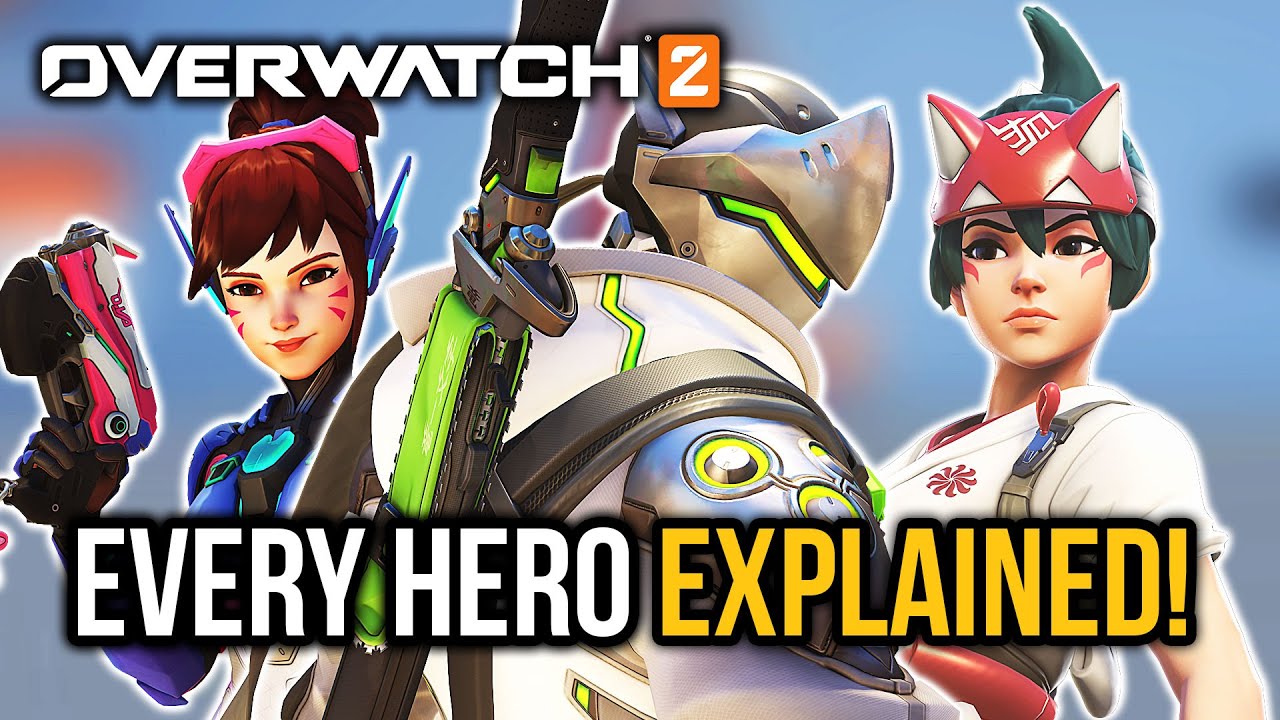
After a few minutes, it was clear that Blizzard’s biggest goal when creating Overwatch was to instill a sense of inclusivity, and this extends beyond the ethnicities of the playable characters. Aside from characters that originate from countries such as Brazil, China, Japan, India, the United Kingdom and more, Overwatch features a nice mix of both female and male characters. And while plenty of the female characters resemble the traditional female body types seen in games, characters such as Mei and Zarya buck the trend of tall, slender females. There’s also a couple of robot characters and a highly-intelligent gorilla, which just showcases Blizzard’s creative abilities even more.
We've had a few metas develop on the tournament side. One of them was the Dual-Tracer/Dual-Zenyatta meta. We took a look at it, and found that it was a bit too strong, so we made some changes to Zenyatta. Now, it hasn't entirely disappeared, www.overwatchtactics.com but it's no longer the dominant meta for tournament play. If we could, we'd like there to be ten to twenty really strong team compositions out there that you're kind of picking between based on the players on your team, the other team or the map you're on.
The game also does its best to highlight the contributions of all players, regardless of playstyle. In-game kills, captures, ‘blocks’ and defends are handed out quite liberally, and your contribution to taking out an enemy (for example) is rewarded with points and an on-screen message, regardless of whether you landed 1 point of damage or 100. A single ‘play of the game’ is shown off at the end of a game, and these highlights often include players in support roles, who didn’t contribute offensively. An MVP system between matches also allows players to cast their vote for an MVP, rewarding a player based on conditions such as kills, captures and damage dealt, along with more defensive plays like ‘most healing’ or time spent freezing enemies. It’s an excellent addition that de-emphasizes the importance of pure offensive play, and it helps (in addition to the other aforementioned design choices) to cultivate a sense of team play, rather than a lone wolf approach to victory.
In truth, when a twenty-one character game is broken down to working to counteracting the powers of one character, that character is busted. Again, it is possible to take him down. This is understood. However, it requires more than a little luck or working with the sole purpose of gaining a few seconds of respite before the character respawns. Anyone who doubts that this character is broken only needs to witness the play of the game at the end of each match. If Bastion is on the field, it's him. The replay is typically the winning player mowing down a couple of hapless enemies in less than a second for having the audacity to wander near the capture point.